

Loading...
Here to Help!
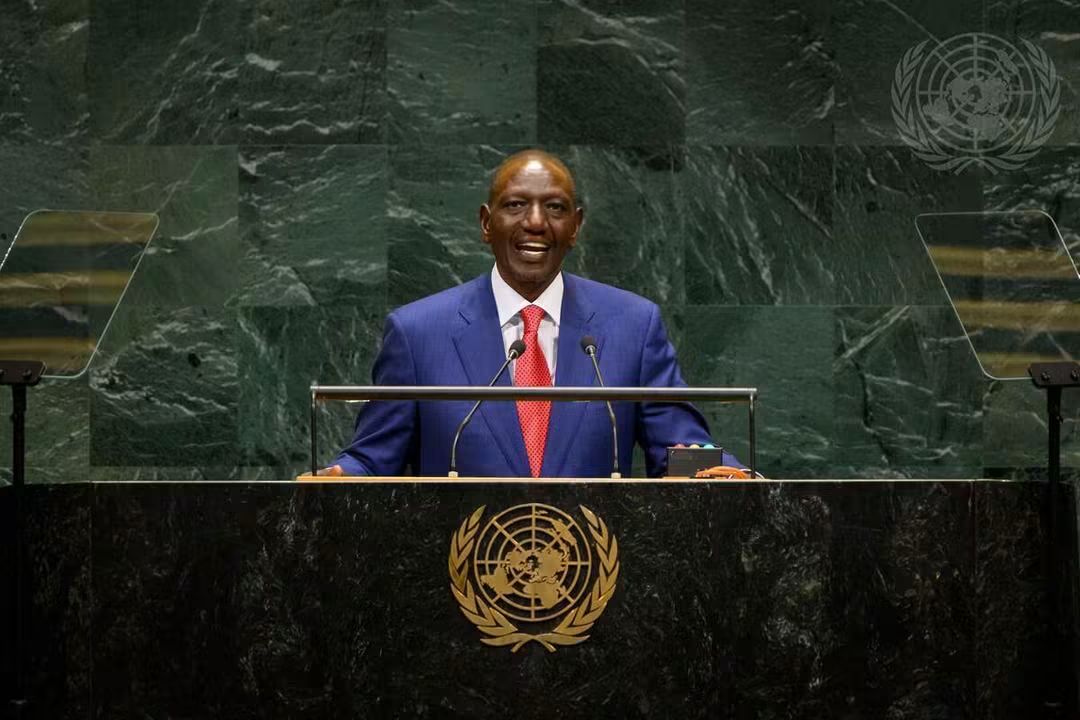
President William Ruto used Kenya’s address at the 81st Session of the United Nations General Assembly in New York to call for major reforms to the institutions that govern international peace, security and development. Speaking before world leaders on September 23, 2026, the President argued that the global system must change to reflect the realities of the modern world.
A major focus of President Ruto’s address was the structure of the United Nations Security Council. He questioned a system in which five countries hold permanent membership and veto powers while the majority of UN member states do not enjoy the same influence. Africa, despite having 54 countries and being directly affected by many of the peace and security matters considered by the Security Council, still has no permanent seat. President Ruto therefore renewed Kenya’s call for Africa to receive equitable and permanent representation on the Council, including the privileges associated with permanent membership.
The President placed this argument within the history of the United Nations. When the organisation was established in 1945, much of Africa remained under colonial rule and only a small number of African countries participated in the conference that created the UN. Kenya itself joined the organisation in December 1963, shortly after gaining independence. According to Ruto, global institutions designed under those historical circumstances should now evolve to represent a world that has changed considerably over the past eight decades.
Peace and security were another important part of the President’s message. Ruto pointed to the increasing number of armed conflicts around the world and argued that international institutions should place greater emphasis on preventing conflicts instead of responding only after violence has escalated. He connected peace directly with development, noting that conflict disrupts education, healthcare, families and economic activity.
President Ruto also called for reforms to the international financial system. Kenya has argued during the UN meetings that developing countries, particularly those in Africa, need a global financial architecture that provides fairer access to capital and assesses investment risks more accurately. Earlier during his engagements in New York, Ruto said Africa possesses significant domestic capital but that existing financial rules can make it difficult to direct these resources towards infrastructure, energy, transport and industrial development.
His message formed part of a wider Kenyan agenda at the 81st UN General Assembly. Kenya entered the meetings seeking international discussions on debt sustainability, climate finance, digital trade, regional security and reforms to global institutions. The country has also advocated greater African participation in technological development and in shaping international rules surrounding emerging technologies such as artificial intelligence.
The President’s address ultimately centred on the question of whether institutions created for the world of 1945 remain sufficiently representative of the world of 2026. Kenya’s position is that multilateral cooperation remains important, but that international institutions need reforms that give developing countries a greater role in decisions affecting their economies, security and development.
For Kenya and the wider African continent, the debate is particularly significant. Calls for permanent African representation on the Security Council and changes to international financing are not simply questions of diplomatic representation; they concern how African countries participate in decisions about peace, investment and development.
President Ruto’s message in New York was therefore one of reform rather than withdrawal from international cooperation: global institutions should continue bringing nations together, but their structures should evolve so that countries across Africa and the developing world have a meaningful voice in shaping the decisions that affect them.
Comments
Be respectful and constructive in your comments.