

Loading...
By Donald O. Magambo
Treausrer, HUSIKA| Researcher in Digital Governance and Public Participation
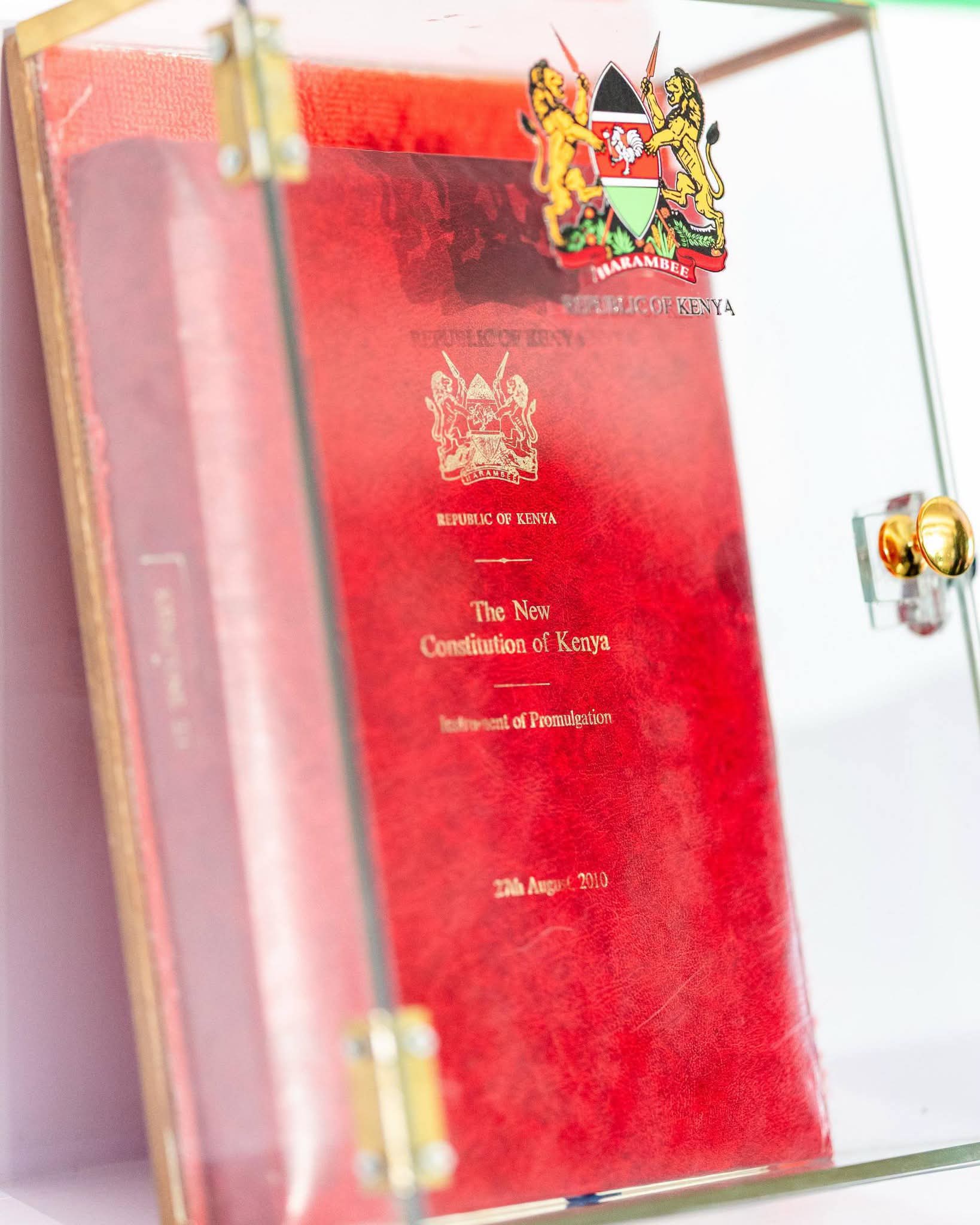
Today, Kenya marks 16 years since the promulgation of the Constitution of Kenya, 2010.
Sixteen years ago, on 27 August 2010, Kenyans gathered at Uhuru Park to witness the birth of a new constitutional order. It was more than the unveiling of a legal document. It was the culmination of decades of struggle, sacrifice and hope for a Kenya governed differently. A Kenya founded on human rights, democracy, equality, social justice and the rule of law.
Today, as we celebrate Katiba at 16, we should do more than remember the ceremony. We should ask ourselves what the Constitution has meant in the lives of ordinary Kenyans. And this is not an exercise in criticizing everything.
Far from it. The 2010 Constitution has changed Kenya in ways that deserve recognition for instance, Devolution has fundamentally altered the distribution of political power and public resources. The Bill of Rights has given citizens a stronger legal foundation to defend their freedoms and demand justice. Independent institutions, constitutional commissions and the Judiciary have played important roles in holding power to account.
Perhaps most importantly, the Constitution changed the relationship between the citizen and the State.
Article 1 is clear: all sovereign power belongs to the people of Kenya. That is one of the most powerful statements in our constitutional order. But 16 years later, we must ask: how much of that sovereignty do ordinary Kenyans actually exercise?
Can a young Kenyan in a village participate meaningfully in decisions about the public budget? Can a resident question how county resources are being spent and receive a meaningful answer without the fear of being abducted? Can a citizen challenge an unfair government decision without feeling powerless? Do we understand that public participation is not a favour granted by government, but a constitutional principle?
These are not questions meant to condemn our country. They are questions meant to strengthen it.
One of the Constitution's most visible achievements is devolution. The creation of 47 county governments brought political leadership, resources and government closer to citizens. In many parts of the country, services and development opportunities that once seemed distant from Nairobi are now managed at county level. That is progress.
But devolution must ultimately be measured by more than the number of counties, governors or county assemblies. We should ask whether citizens are receiving better healthcare, better roads, clean water, improved agricultural support and other services because of devolution.
We should also ask whether county governments are sufficiently transparent and accountable to the people they serve.
The answer will not be the same everywhere. Some counties have made meaningful progress; others still struggle with service delivery, accountability and the effective use of public resources.
That is why our conversation about devolution should not be about declaring it a success or failure. It should be about making it work better.
You see, The Constitution gives Kenyans extensive rights and freedoms. But a right written on paper becomes meaningful only when a citizen can actually enjoy it.
The right to healthcare matters when a mother can access treatment.
The right to education matters when a child can learn in a safe and properly equipped environment.
The right to information matters when citizens can obtain information about how public resources are being used.
The right to participate matters when public participation actually influences decisions.
This is where the real test of our Constitution lies. The President himself said during today's Katiba Day celebrations that the success of the Constitution should ultimately be reflected in the daily lives of Kenyans, pointing to areas such as healthcare, education, housing, agriculture and social protection and that is a principle worth taking seriously regardless of our political affiliations.
As citizens, it is easy to demand accountability from leaders and we should but constitutionalism cannot survive on government responsibility alone. Therefore, citizens also have a responsibility to understand the Constitution, participate in public affairs, respect the rights of others, reject corruption and make informed decisions during elections. We cannot demand accountable leadership while selling our votes. We cannot demand transparency while refusing to ask questions about public expenditure. We cannot demand good governance while remaining silent when our own leaders misuse public resources simply because they belong to our political side.
Constitutionalism must be bigger than political parties, tribes, personalities and elections.
That is perhaps one of the greatest challenges facing our generation.
As a responsible Kenyan, I believe that questioning the government is not an act of hatred towards our beloved country. It is an expression of patriotism. A responsible citizen should be able to celebrate what is working while questioning what is not. We should be able to applaud our institutions when they protect citizens and demand better when they fall short. We should be able to recognize progress without becoming complacent. And we should be able to criticize policies without believing that criticism of a government is criticism of the country.
Kenya is bigger than any administration and our Constitution is bigger than any political party. And the sovereignty of the Kenyan people is bigger than any individual leader. Sixteen years after promulgation, therefore, perhaps the question should not simply be "Has the Constitution succeeded?"
The better question is:
"Are we, as Kenyans, doing enough to make our Constitution succeed?"
Because a constitution cannot build a nation by itself.
It provides the framework.
Institutions must uphold it.
Leaders must respect it.
And citizens must know it, use it and defend it.
So as we celebrate Katiba at 16, let us therefore celebrate the distance we have travelled but let us also have the courage to acknowledge the distance that remains. Let us not lose faith in the constitutional promise because implementation is difficult. Instead, let us become more determined to make that promise real to ourselves and our Nation, Kenya.
Katiba yetu. Nchi yetu. Wajibu wetu.
Happy 16th Anniversary of the Constitution of Kenya.
God Bless Kenya.
Comments
Be respectful and constructive in your comments.